

The IMPACT-AML Project showcased at ENL Breakfast Meeting in Orlando, Florida
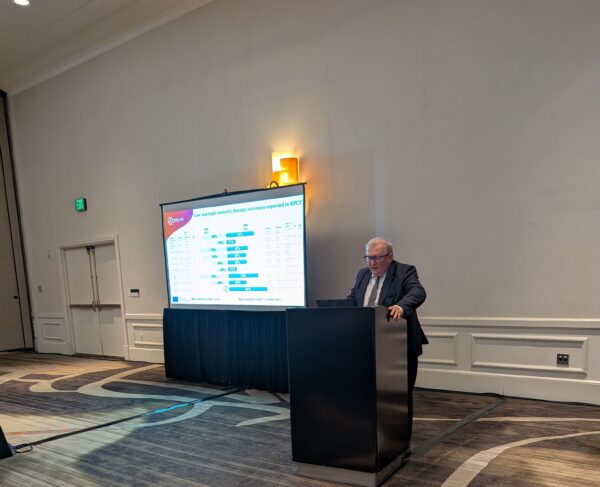 The ELN Breakfast Meeting took place on Sunday, December 7th, 2025, from 7:30 to 9:00 AM at the Renaissance Orlando at SeaWorld, in Florida, alongside the American Society of Hematology (ASH) annual meeting. The event focused on WP5 of the IMPACT-AML project, a key European initiative aimed at advancing research and therapeutic strategies for relapsed/refractory Acute Myeloid Leukemia, one of the most complex and difficult forms of the disease. Being held within the framework of the ASH conference highlighted the strong collaborative effort of the European LeukemiaNet and its commitment to sharing scientific progress with the international hematology community, with the ultimate goal of improving patient outcomes.
Chaired by Doctor Giovanni Marconi and Professor Giovanni Martinelli, the meeting offered a comprehensive overview of the IMPACT-AML project and other strategic initiatives. Professor Martinelli opened the session with a general presentation of IMPACT-AML, outlining its objectives and current progress in addressing relapsed and refractory AML. The discussion then moved to opportunities for Phase II clinical studies, presented by Professor E. Acuña, who illustrated possible pathways for translating research results into concrete clinical trials. Prof. Reinhardt presented new ideas for R/R pediatric AML, and collaboration scenarios were discussed. An update on the STREAM Platform was provided by Doctor Marconi, who presented the development of this open, collaborative infrastructure designed to collect and harmonize essential clinical data on relapsed/refractory AML across participating centers. Doctor Moisev provided a further update on the Russian twin study.
The meeting concluded with an open discussion led by Professor Martinelli, giving participants the opportunity to exchange perspectives, share insights, and define future directions for the IMPACT-AML project. Overall, the ELN Breakfast Meeting confirmed its role as a strategic forum for researchers and clinicians to assess progress, strengthen collaboration, and plan the next steps in advancing research on relapsed/refractory AML.